Assistive Devices
The right equipment can support safety, comfort, communication and participation.
Examples Of Assistive Devices
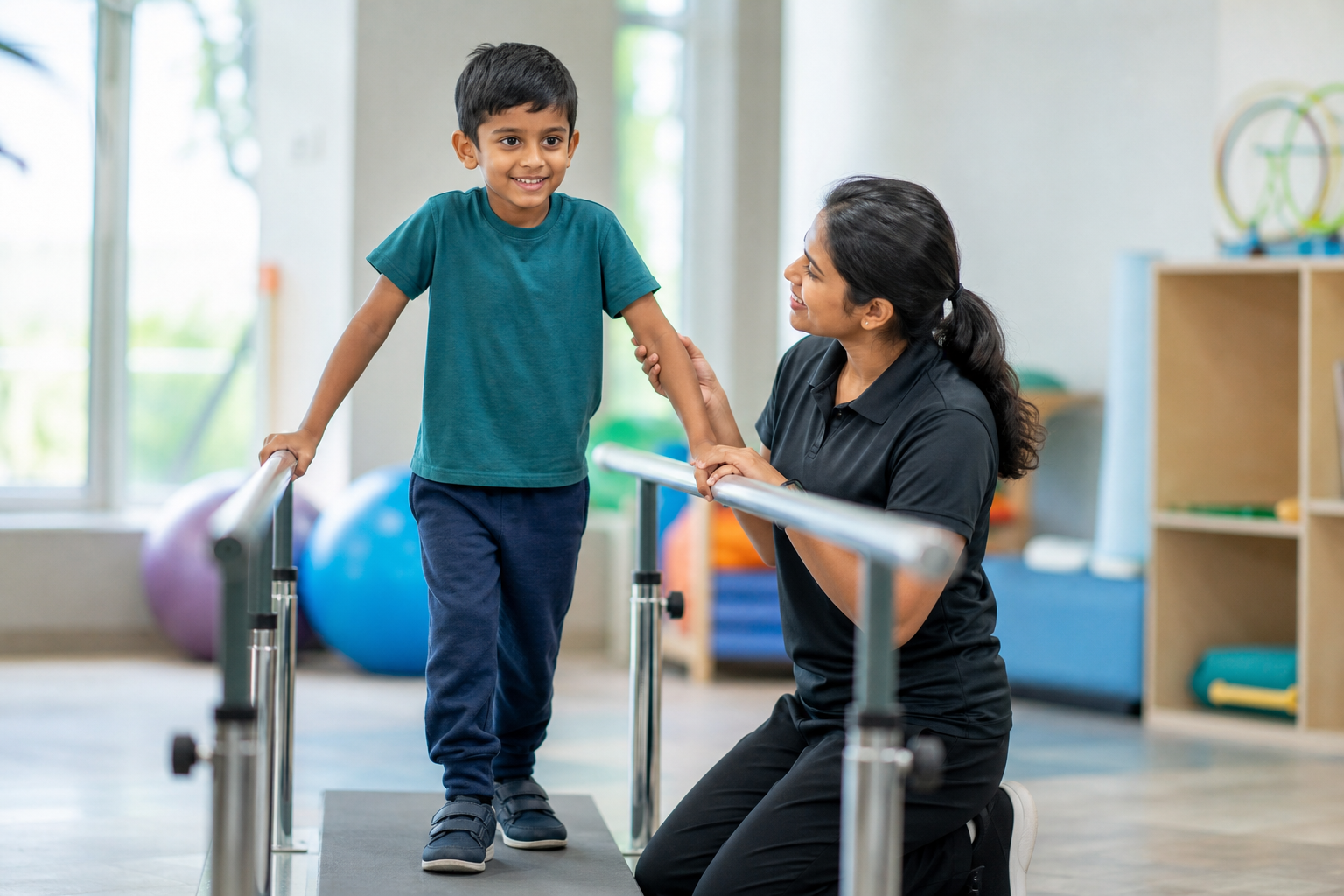
- Walkers and walking aids
- Wheelchairs
- Specialised seating and positioning systems
- Orthoses
- Standing equipment
- Communication boards, devices or apps
- Adapted daily-living tools
Choose Equipment Carefully
Assistive devices can help individuals live more active and independent lives.
Before choosing equipment, consult appropriate specialists about fit, safety, training and long-term use.
Learn More About Assistive Devices
Cerebral Palsy can affect every child differently. Video content can help families understand Assistive Devices and related support more clearly.
Watch educational videos, parent guidance and awareness content from Sanidhya CP.
Learn. Understand. Support.
Subscribe for More Videos

Every child is different.
Information on this website is provided for awareness and education. It should not replace advice, diagnosis or treatment from a qualified healthcare professional.
If you have concerns about your child's development, movement, feeding, communication, vision, hearing or learning, please consult an appropriate healthcare or rehabilitation professional.